It is a long established fact that a reader will be distracted by the readable content of a page when looking at its layout.

Working Hours
- Saturday 9:00 - 12:00 pm
- Sunday closed
It is a long established fact that a reader will be distracted by the readable content of a page when looking at its layout.
In today’s digital landscape, information is one of your most valuable assets. However, how you manage that information is what truly determines its worth. If you’ve begun exploring ways to organize your organization’s data, you’ve likely encountered three key terms: DMS, EDMS, and ECM. While they share the common goal of organizing digital assets, they are not interchangeable. Picking the wrong one can hinder your growth from the very beginning. This guide simplifies technical terms to explain each system, emphasizes their key differences, and helps you select the right strategy for your content management.
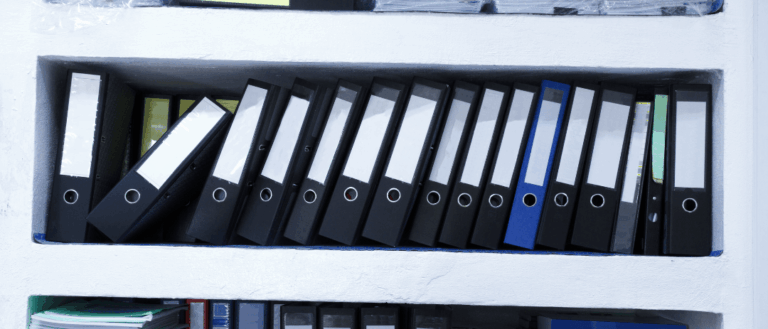
A Document Management System (DMS) is the foundational tool for organizing, storing, and tracking digital files. Think of it as an ultra-efficient, secure digital filing cabinet built for specific file types.
The Bottom Line: A DMS manages the document lifecycle from creation to retention. It keeps your paper-like files in order.

The term EDMS (Electronic Document Management System) is often used interchangeably with DMS in modern technology. The emphasis on “Electronic” simply reinforces that the system handles digital content rather than physical archives.
An EDMS typically includes features that are now considered standard for a robust DMS, such as:
The Distinction: While technically a subset of DMS, an EDMS is often viewed as the modern, digital-first version that provides the necessary capture and indexing tools to transition your business to a completely paperless operation.

Enterprise Content Management (ECM) is the most significant and most strategic solution. It is a comprehensive framework that incorporates DMS/EDMS capabilities, but expands far beyond simple document storage. ECM is a business strategy, not just a software solution.
The Bottom Line: An ECM platform turns disparate content into a unified source of organizational knowledge, driving strategic decision-making and operational excellence.

Feature
DMS (Document Management System)
EDMS (Electronic DMS)
ECM (Enterprise Content Management)
Departmental/Small Business Tool
Modern, Digital DMS
Enterprise-Wide Strategy
Structured Documents (PDFs, Word, Spreadsheets)
Structured Documents & Scanned Images
All Content Types (Structured, Unstructured, Media, Emails, Web Content)
Storage, Version Control, Basic Security
Document Capture, Indexing, Retrieval
Content Lifecycle Management, Process Automation (BPM), Integration
Basic, linear document routing
Basic, digitized document workflows
Advanced, complex, cross-functional automation
Limited to moderate file volumes
Moderate to high file volumes
Massive content volumes and high scalability
Conclusion: Stop Storing, Start Managing
Choosing between these systems comes down to two key questions:
What content are you managing? If it’s strictly structured documents for a single team, a DMS/EDMS is likely enough.
What is your end goal? If you need to integrate content across the entire enterprise, automate complex business processes, and manage diverse media types to fuel strategic decisions, ECM is your required platform.
If your focus is on long-term automation, compliance across multiple departments, and making your entire content ecosystem intelligent and efficient, the comprehensive approach of Enterprise Content Management is the clear investment for future success.
Contact us today for a free consultation to map your document needs to the perfect content management solution.
Signup Today
Stay informed and be the first one to know about our latest cutting-edge solutions.
Copyright © 2023 Sage Informatics (PTY) Ltd. All Rights Reserved.